
Last updated November 24, 2026
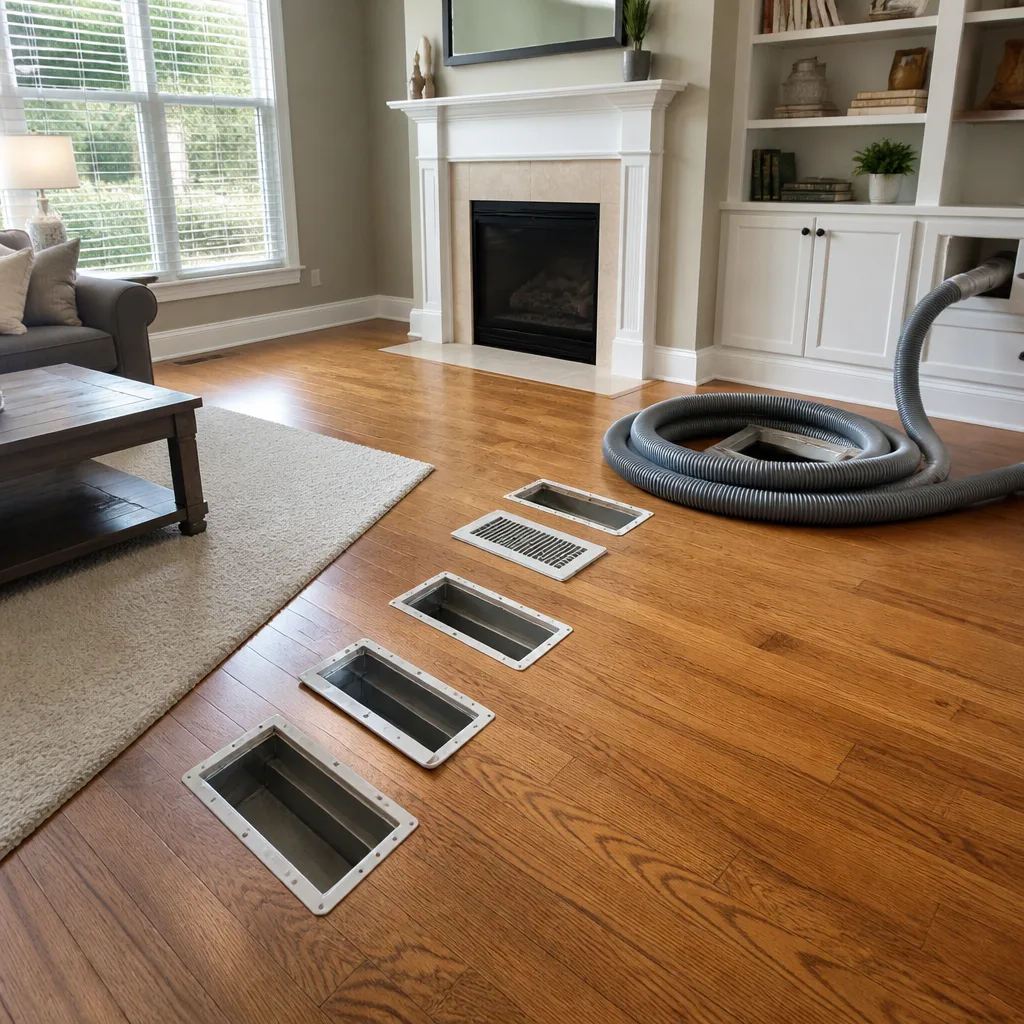 Whole-home duct cleaning
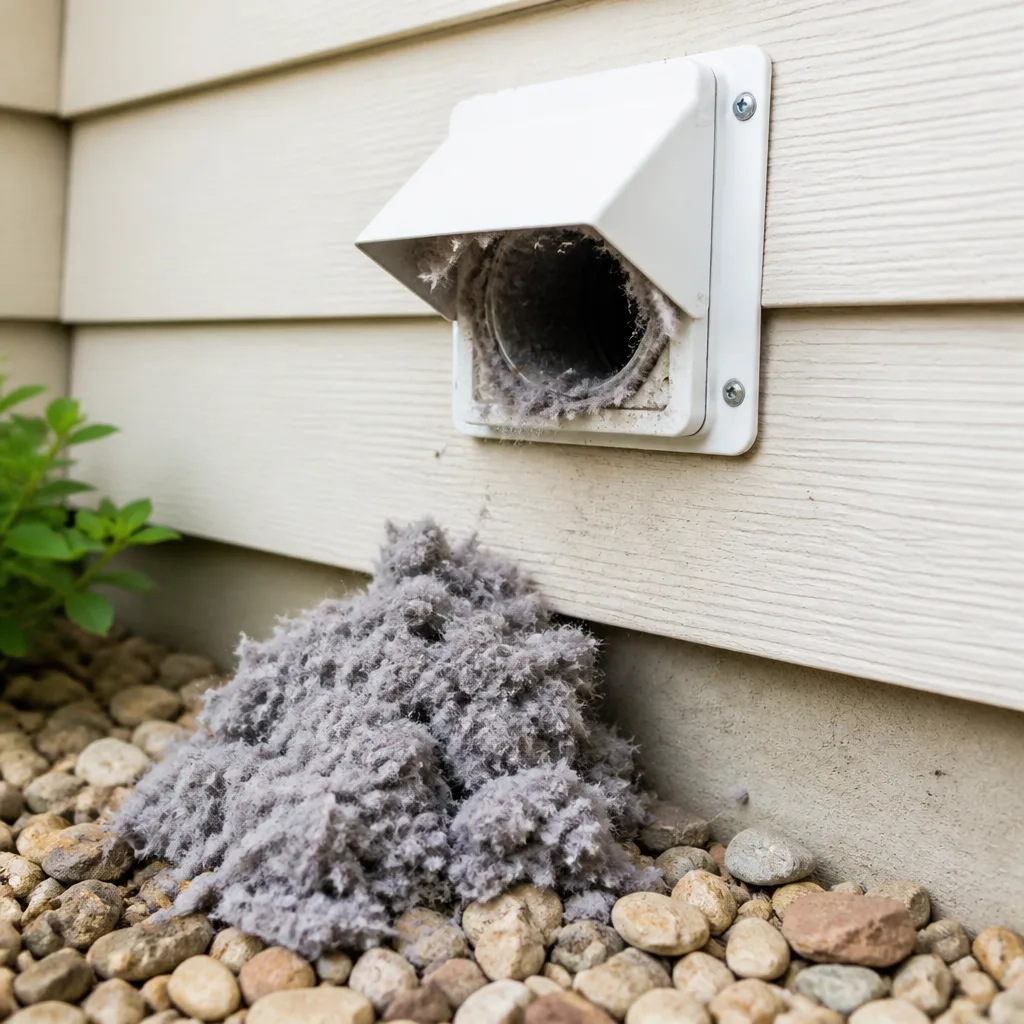 Dryer vent cleaning
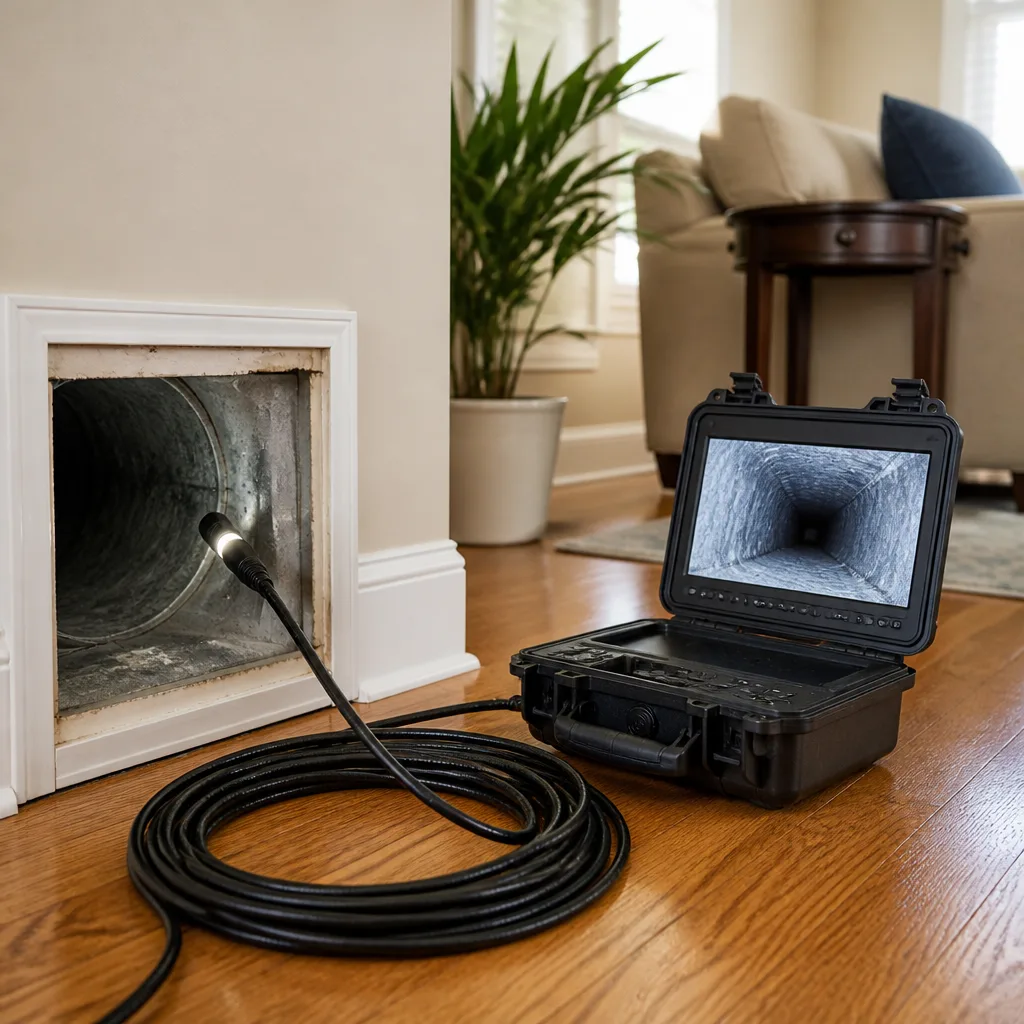 Camera inspection
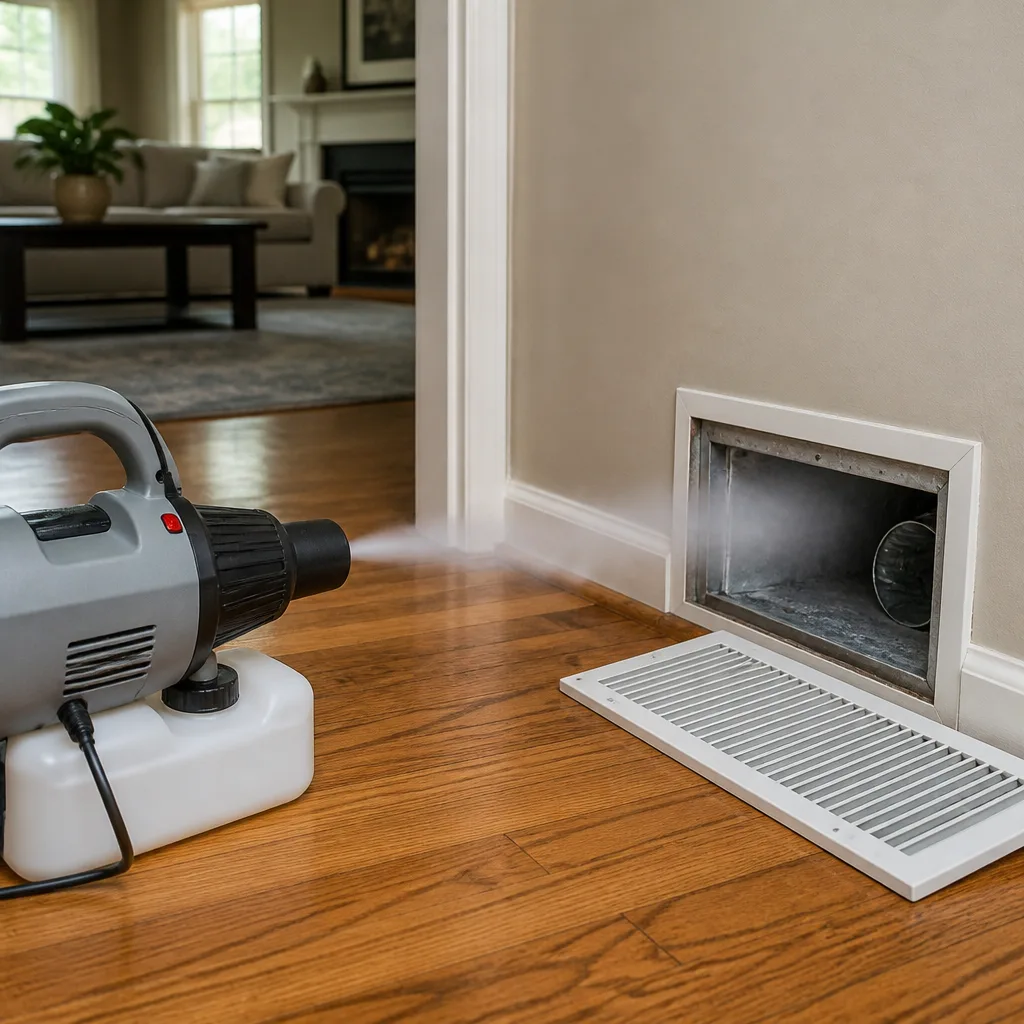 Sanitizing & deodorizing
Whole-system duct and dryer vent check with before-and-after photos - you see exactly what came out of your vents
That "$99 whole-house special" is a bait ad - the real number appears once they are in your hallway, or the "clean" is a shop-vac at the register. We photograph the inside of your ducts before and after instead.
Air Duct Cleaning Permits, Codes & Inspections in Downtown Anaheim, CA: What You Need to Know
A routine duct cleaning is maintenance. Nobody signs off on it, nobody inspects it, and no permit office ever hears about it. But the moment a technician patches a collapsed flex run, replaces a section of duct board, or sprays an EPA-registered encapsulant through the system, the job has quietly become construction work. In Downtown Anaheim that shift matters, because it changes who is allowed to do it and what paperwork should follow. This guide walks through California’s mechanical code, Anaheim’s permit thresholds, mold remediation rules, and what a home inspector will look for when a Downtown Anaheim property changes hands.
Quick Answer
Cleaning ducts in California generally requires no permit. Duct repair, liner replacement, changes to the duct system’s layout, and mold remediation inside ducts fall under California Mechanical Code and Anaheim Building Division rules, and that work typically does require a permit, a C-20 licensed contractor, and documentation. Ask for the written scope of work before anyone starts, and check whether the job crosses that line.
Styles & brands we work with
- Whole-home duct cleaning
- Dryer vent cleaning
- Camera inspection
- Sanitizing & deodorizing
Table of Contents
- What Does the California Mechanical Code Actually Cover?
- When Does Duct Work Need a Permit in Downtown Anaheim?
- Why a C-20 License Matters for Duct Work
- Mold in Ducts: Containment and Disposal Rules
- How Unpermitted Duct Repairs Surface During a Home Sale
- What Documentation a Compliant Contractor Should Hand You
- A Step-by-Step Checklist Before You Book the Job
- Why Downtown Anaheim’s Climate Makes Ducts Work Harder
What Does the California Mechanical Code Actually Cover?
The California Mechanical Code sets the rules for how duct systems are designed, installed, and altered. Its duct provisions cover materials, sizing, sealing, support, and the connections between duct runs and the equipment they serve. The code is not a cleaning standard. It is a construction standard, and that distinction is the whole point of this guide.
Two different kinds of work get called “duct work” by homeowners:
- Maintenance: removing accumulated dust, debris, and biological growth from inside an existing, unchanged duct system. Cleaning, sanitizing, and vacuuming belong here.
- Construction: changing the system itself. Cutting in a new register, replacing a crushed flex run, re-sealing joints with mastic, swapping out duct board, adding a return, or applying a coating to the interior surface.
Cleaning an unchanged system is maintenance. Altering the system is construction, and construction work on duct systems is where the code and the permits live. In our experience, most homeowners don’t realize the difference until a technician is already on site and recommends a repair. That is the worst time to learn it. Ask for the scope of work before anyone arrives, and read it for verbs like replace, seal, install, reroute, or encapsulate.
Downtown Anaheim adds its own twist here. The neighborhood has a large stock of older homes and mixed-density buildings, and many of them have duct systems that were added, extended, or rerouted long after the original construction. When we open up a system on a Downtown Anaheim property, it is common to find a run that was spliced in years ago with no record of who did it or how. That history matters, because it shapes what a proper maintenance visit can honestly claim to fix.
When Does Duct Work Need a Permit in Downtown Anaheim?
Anaheim’s Building Division handles permits for mechanical work, and the thresholds mirror the state code. Routine cleaning is not a permitted activity. Duct alterations that change the system’s configuration, capacity, or materials generally are. The safe rule: if the work changes the duct system rather than just cleaning it, call the city’s building department and ask whether the specific scope requires a permit.
Here is a practical way to think about it:
- Pure cleaning. No permit. Vacuuming, brushing, agitation, and sanitizing an unchanged system.
- Sealing existing joints. Often no permit when it is maintenance-level work on existing connections with no change to layout or material.
- Replacing a section of duct. Usually permitted work, because it is an alteration of the system’s materials.
- New runs, relocated registers, or added returns. Permitted work, because the system’s configuration changes.
- Interior coatings or encapsulants. Varies by product and application. Ask the building department directly, and ask the contractor for the product’s data sheet.
We can’t give you a blanket answer for every scope, and neither should anyone else. What we can tell you is what to ask. Call Anaheim’s Building Division with three pieces of information: what part of the duct system is changing, what material is being used, and whether the system’s layout or capacity changes. Their answer is the one that counts.
If the answer is “yes, that needs a permit,” the contractor pulling it should be the one performing the work. A contractor who tells you a duct replacement is “just maintenance” to avoid the permit is telling you something about how they operate.
Why a C-20 License Matters for Duct Work
California requires a C-20 Warm-Air Heating, Ventilating and Air-Conditioning Contractor license for work that alters HVAC and duct systems. Cleaning is not contracting. Altering the system is. That line is exactly the same line as the permit question, and it is the single most useful thing to understand in this whole guide.
So how do you check? The Contractors State License Board maintains a public lookup. Any contractor doing permitted duct work should be findable there, and the license class should match the work. For cleaning and sanitizing alone, the requirements are different, and the local pro you work with should still be licensed and insured as their state requires.
A short, honest conversation at booking sorts this out:
- Ask what license class the person performing the repair holds.
- Ask who pulls the permit if one is needed.
- Ask whether the cleaning and the repair are being done by the same firm or subcontracted out.
That last question matters more than it sounds. At Air Duct Cleaning Downtown Anaheim, we handle the full system under one roof: cleaning, repair and sealing, sanitizing, HVAC cleaning, and dryer vent work. When a cleaning visit turns up a damaged run, there is no handoff to a third party and no gap where the scope of work gets lost between contractors.
Mold in Ducts: Containment and Disposal Rules
Mold growth inside a duct system triggers a different set of requirements than ordinary dust. California Health & Safety Code gives the state Department of Public Health authority over mold-related standards, and the practical upshot for duct work is that remediation involves containment, safe removal, and proper disposal of contaminated material. That is not a cleaning job with a spray bottle at the end.
What a compliant remediation scope should include:
- Containment so spores don’t spread into occupied rooms during removal.
- Negative pressure or HEPA filtration on the work area, which is where Abatement Technologies equipment earns its place. It is the standard used in mold and fine-particle abatement work, and it pulls particles down to a level ordinary vacuums cannot touch.
- Removal of contaminated porous material rather than coating over it. Duct board and flex with active growth usually can’t be cleaned back to a sound state.
- Disposal of the removed material as contaminated waste, bagged and sealed before it leaves the property.
- Post-remediation verification before the system goes back into service.
An EPA-registered encapsulant applied after cleaning is a legitimate part of some remediation scopes, but it is a coating, not a repair. It does not replace removal of compromised material, and it does not undo a permit question if the underlying work changed the system. Ask what product is being applied and ask for its data sheet.
Sanitizing is the step after cleaning, and the product matters. Guardsman-grade treatments are what we use on qualifying jobs, applied after the debris is out and the surfaces are clean. Spraying a sanitizer onto a dirty duct does very little.
How Unpermitted Duct Repairs Surface During a Home Sale
During a home sale, a general inspector who sees a duct system with evidence of alteration may flag it as a possible unpermitted modification. That does not automatically kill a transaction, but it starts a process. The buyer’s agent asks for documentation. The seller doesn’t have any. The clock starts ticking.
What the process usually looks like:
- The inspector notes evidence: mismatched duct materials, unsealed penetrations, a spliced run with no mastic, or a register that doesn’t line up with the original layout.
- The seller is asked to produce permits or documentation for the alteration.
- If none exists, the buyer may request a licensed contractor inspection and a written assessment.
- Depending on what the contractor finds, the remedy is either retroactive permitting (where the city allows it) or corrective work to bring the system into a sound state.
- Either path costs the seller time, and often money, at the least convenient moment.
For Downtown Anaheim property owners in older buildings, the risk is higher than the average. Systems get modified over decades by previous owners and previous contractors, and records disappear. If you are planning to sell within a few years, it is worth having the duct system documented now, while you have time to fix what turns up.
Property managers in Downtown Anaheim feel this differently. A tenant complaint about air quality turns into a maintenance request, which turns into a contractor visit, which turns into a repair. Documenting the scope and outcome of that repair protects the owner at turnover and protects the manager if the system comes up again.
What Documentation a Compliant Contractor Should Hand You
Regardless of whether your job needed a permit, a serious contractor gives you a paper trail. The paper trail is how you know the work was actually done, and it is what protects you if the system comes up in a future inspection or sale.
Here is what to expect:
- A written scope of work listing what will be cleaned, what will be repaired, and what will not be touched.
- Before-and-after photos of your own ducts, not stock images. This is the single most useful document for verifying the work happened.
- Product data sheets for any sanitizer or encapsulant used, including the EPA registration number.
- Permit documentation if the scope required one, with the permit number and the inspection record.
- A written estimate that sets the price for the whole system before work begins.
That last item is where the industry has a reputation problem. A low teaser price that becomes a much larger invoice once the technician is inside your home is the most common complaint in this trade. We price per system, one flat price agreed before work starts, with no per-vent pricing. Your written estimate sets the final number.
A Step-by-Step Checklist Before You Book the Job
Use this before you schedule anything, whether it is a routine air duct cleaning or a repair job:
- Write down what you want fixed. Dust, mustiness, uneven airflow, or visible damage are four different problems with four different scopes.
- Ask for the scope of work in writing. Read it for any verb that changes the system.
- Decide whether a permit is needed. If the scope changes the duct system, call Anaheim’s Building Division and ask.
- Verify the license class. Look up the contractor on the Contractors State License Board site.
- Ask what equipment will be used. Professional duct cleaning uses purpose-built equipment. Rotobrush and Nikro systems are the ones you want to hear named.
- Ask how the price is structured. Per system, agreed in advance, written on the estimate.
- Ask for before-and-after photos. If the answer is no, that is your answer.
- Keep every document. The scope, the estimate, the photos, the product sheets, and any permit records belong in your home files.
We also handle HVAC cleaning alongside duct work, which matters because the air handler and coil are usually where the contamination starts. Cleaning ducts without cleaning the equipment they connect to is a partial job. Dryer vent work is in the same category, and we treat it as a fire-hazard prevention service rather than an add-on: dryer vent cleaning moves lint out of the exhaust path before it becomes fuel.
Why Downtown Anaheim’s Climate Makes Ducts Work Harder
Downtown Anaheim sits in a warm, dry climate with a long cooling season. The practical consequence for ducts is that the system runs hard for most of the year, and the air moving through it carries a lot of fine dust and pollen from the surrounding area. Those particles settle in the plenum, the return, and the horizontal runs, where they accumulate faster than they would in a climate where the system rests half the year.
The climate also puts pressure on the building envelope. In the older Downtown Anaheim housing stock, duct systems are often routed through unconditioned spaces, and poor sealing at those transitions means the system pulls in air from attics and wall cavities rather than from the house. That is one reason a cleaning can look like a waste of money on a system with a serious sealing problem: the ducts are clean, and the next cooling season refills them with outdoor dust through the leaks.
Clean it, seal it, upgrade it is the order that actually works. Cleaning removes what’s there. Sealing closes the path for what comes next. Upgrades like Aprilaire and Honeywell filtration and humidity control keep the system’s air quality where it should be once the foundation is solid. In a climate where the system runs almost year-round, that sequence buys you the longest interval before the next deep clean.
If the system was already altered at some point, the sealing step is also a documentation opportunity. If a contractor is going to open up a run to seal it, take photos. If the run turns out to need replacement, the permit question from earlier in this guide becomes live, and the honest thing is to say so before the work starts.
Common Mistakes to Avoid
- Treating repair work as cleaning work. If a technician replaces a duct section without a permit because it was sold as “part of the cleaning,” you have an unpermitted alteration in your home, and the record will not exist when you sell.
- Skipping the license lookup. California’s Contractors State License Board lookup takes two minutes and tells you whether the person doing the alteration holds a C-20 license. Skipping it means trusting a name on a flyer.
- Accepting a per-vent quote. Per-vent pricing makes the job sound cheap at the door and gives the contractor an incentive to count vents aggressively. Ask for a per-system price in writing.
- Letting someone spray a sanitizer before cleaning. Sanitizing a dirty duct does nothing useful. The sequence is debris removal, then sanitizing, then verification.
- Assuming a coating is a fix. An encapsulant applied over contaminated duct board is not remediation. Ask what is underneath the coating before you agree to it.
- Not asking for before-and-after photos. Photos of your own ducts are the simplest proof the work happened. A contractor who can’t produce them is asking you to trust the invoice.
- Ignoring the HVAC unit itself. Cleaning ducts while leaving a contaminated coil and blower in place is a partial job. The system is one connected thing, and Downtown Anaheim’s year-round cooling load means the equipment side accumulates contamination too.
See the difference
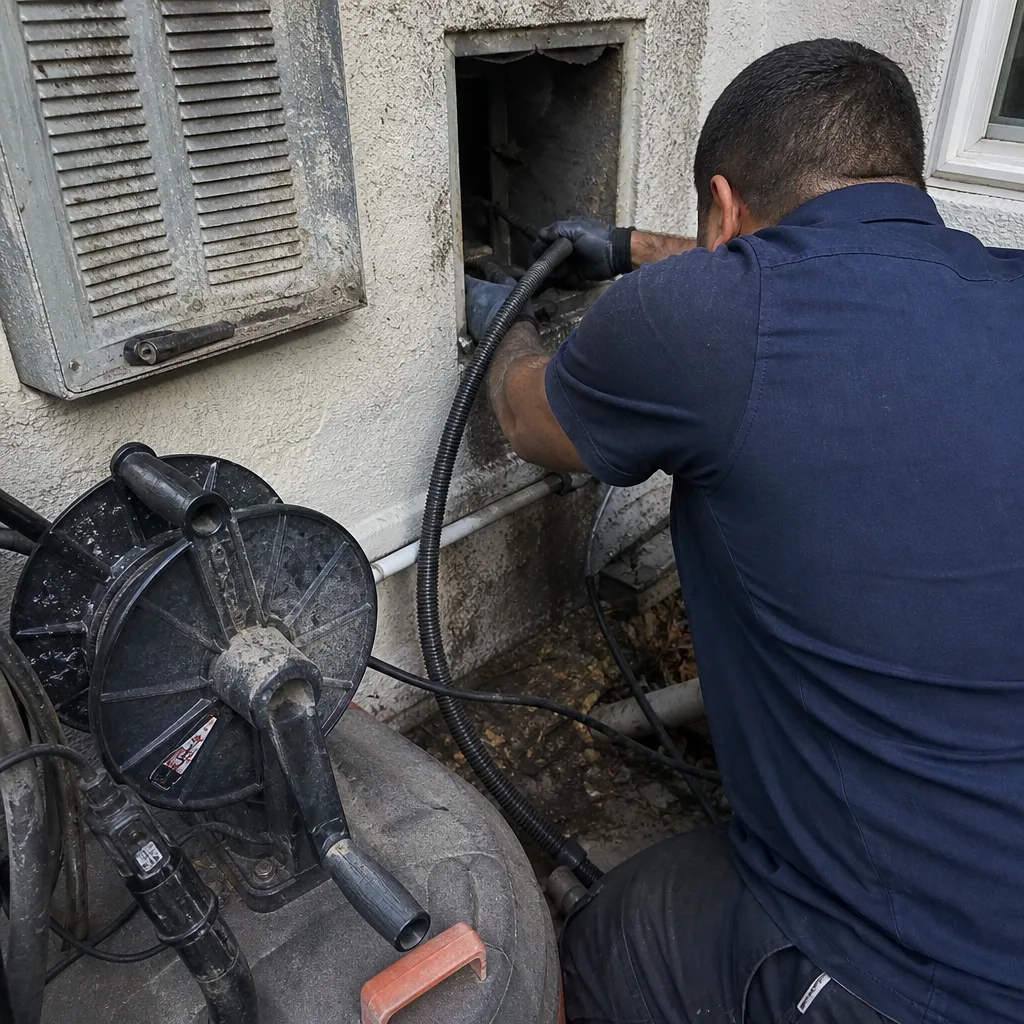 Before
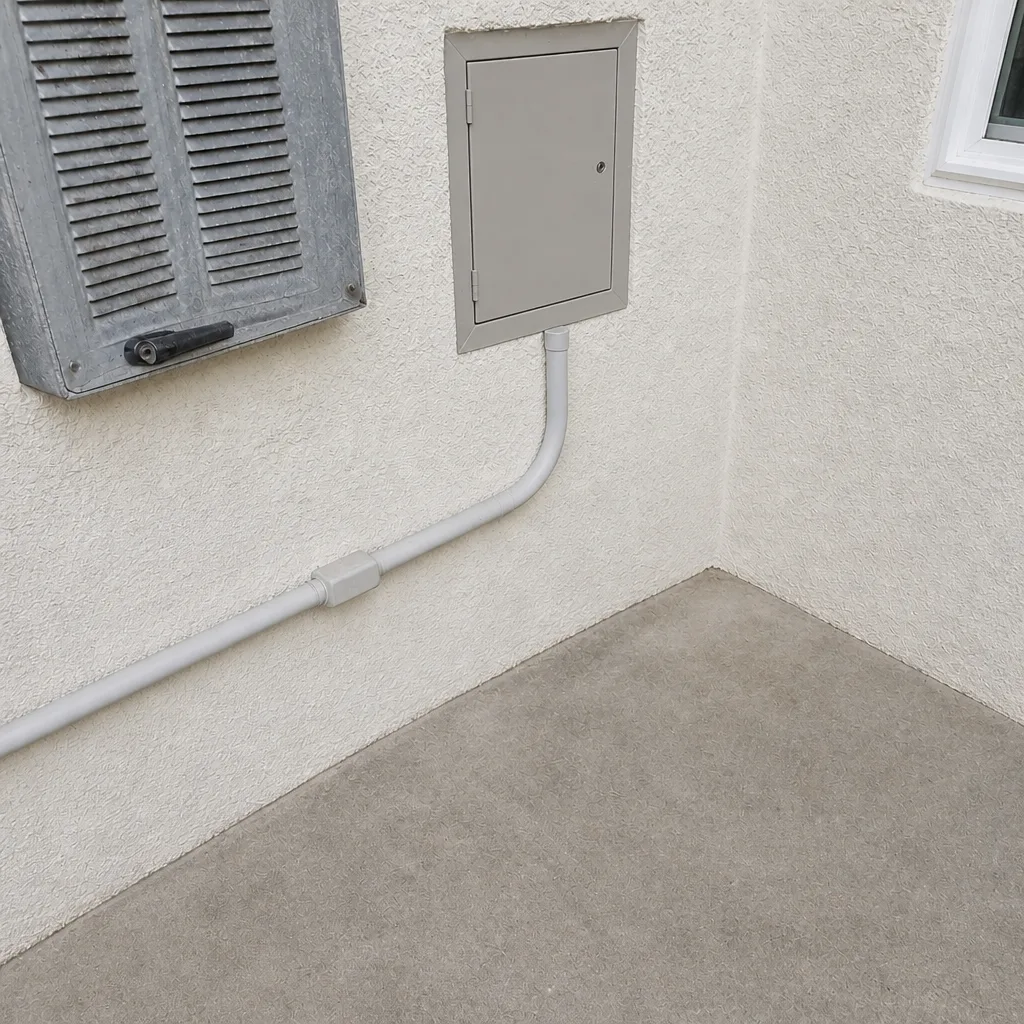 After
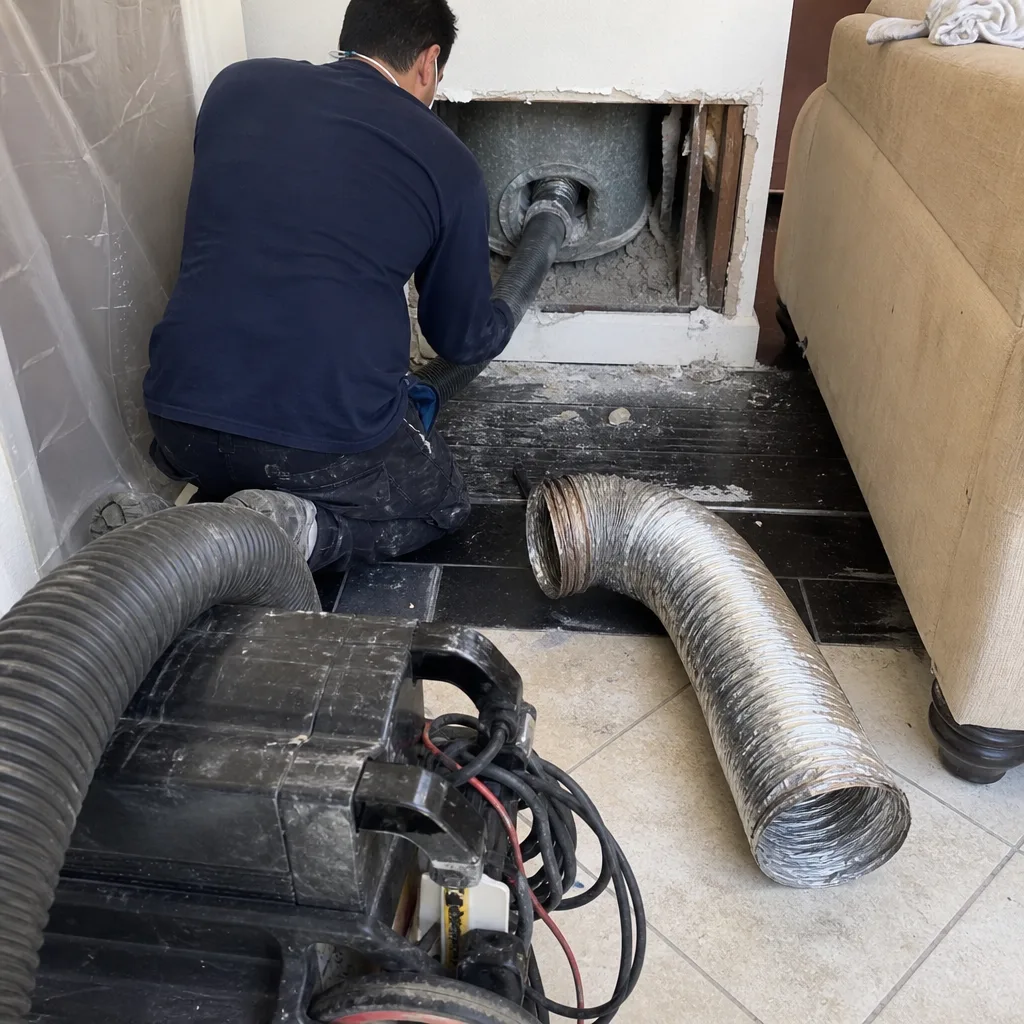 Before
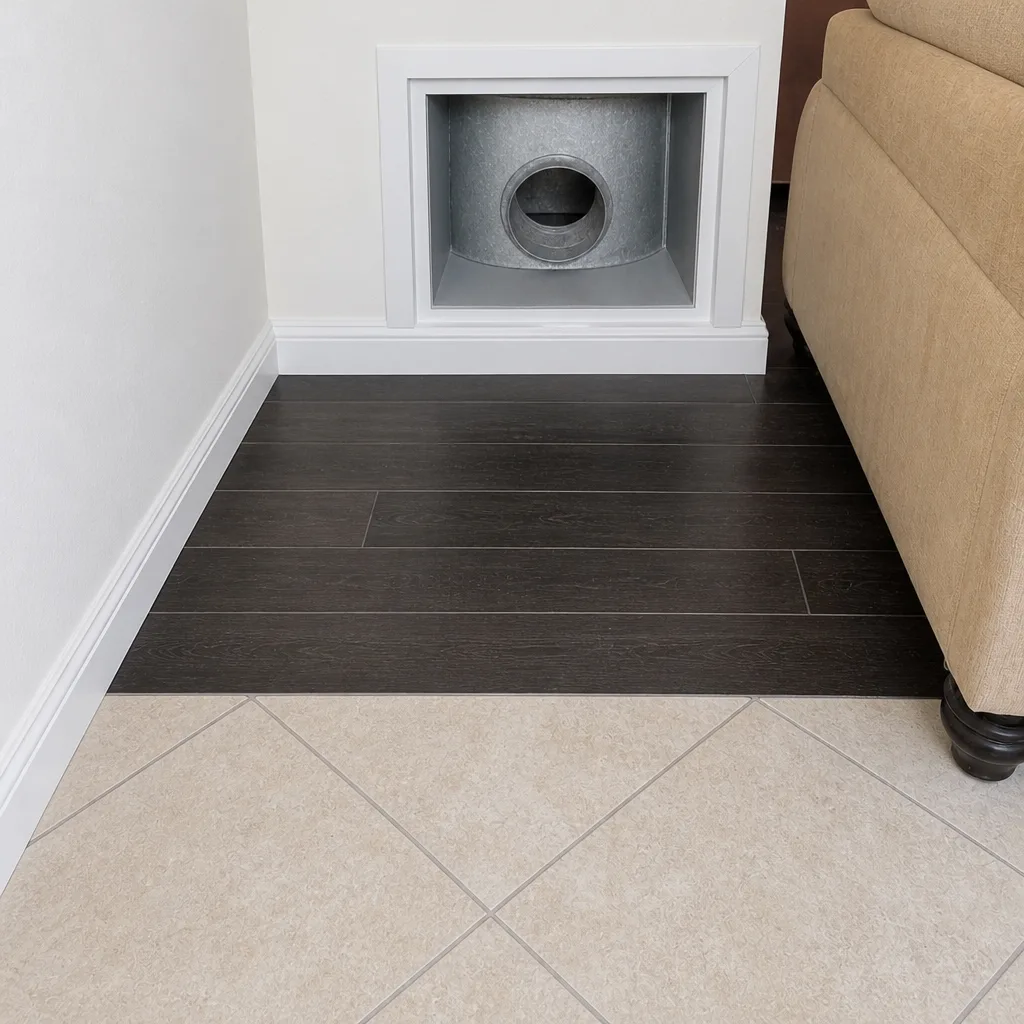 After
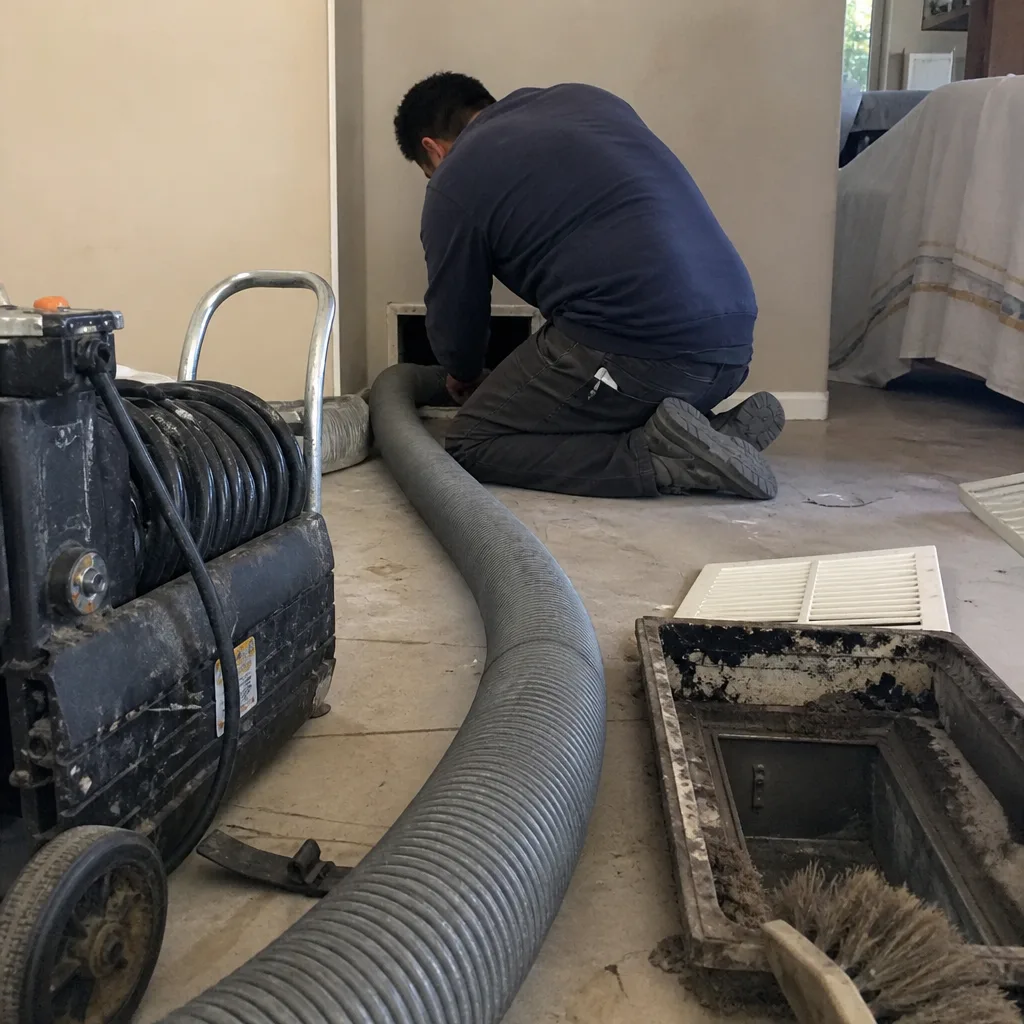 Before
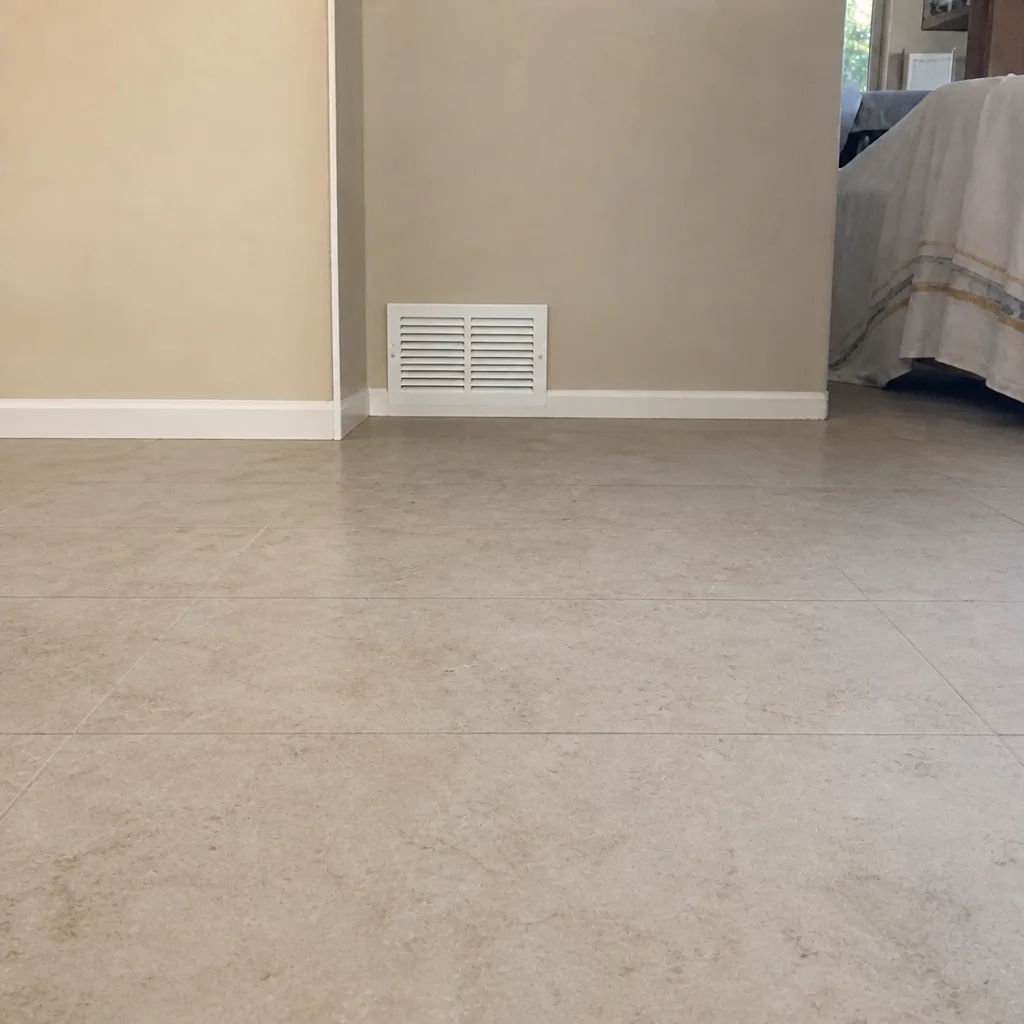 After
When to Call a Professional
Call a professional if you are seeing visible dust blowing from registers, musty or stale odors when the system runs, or uneven airflow between rooms. Call if the system has been through a renovation, if a prior owner’s alterations are undocumented, or if you are preparing a Downtown Anaheim property for sale and want the duct system documented before an inspector does it for you. Call if anyone has proposed a duct replacement, an encapsulant, or mold remediation, because those are the scopes that bring code and permits into play. Do not attempt an interior duct repair on your own. Duct systems are part of the building’s mechanical system, and Alterations are construction work. Air Duct Cleaning Downtown Anaheim offers free estimates in Downtown Anaheim. Call (855) 337-1674 to book one.
Frequently Asked Questions
No. Cleaning an existing, unchanged duct system does not require a permit in Anaheim. The permit question only comes up when the work changes the system’s materials, layout, or capacity, such as replacing a duct run, adding a register, or applying an interior coating. Call Anaheim’s Building Division with the specific scope if you are unsure.
Work that alters the duct system itself, such as replacing ducts, adding runs, or changing the configuration, falls under the C-20 Warm-Air Heating, Ventilating and Air-Conditioning license class. Cleaning and sanitizing an unchanged system is not contracting. When a cleaning turns up a repair, that repair needs the license. Ask before the work starts.
The permit record should exist at the city and the contractor should be able to produce it in writing. Ask for the permit number and the inspection record. If the work was done before you owned the property, the record may not exist, which is exactly the scenario a home inspector looks for. Call (855) 337-1674 for an exact quote on documenting your system.
Containment, removal of contaminated porous material, HEPA or negative-pressure filtration during removal, bagged disposal of the removed material, and verification before the system goes back into service. Spraying an encapsulant over active growth is not remediation. The removal is the work, and the coating is a finishing step when it’s appropriate.
It can. A general inspector who sees evidence of an alteration may flag it, and the buyer may then request documentation or a licensed contractor’s assessment. The remedy is either retroactive permitting or corrective work, and either path costs time and money at the least convenient moment. Documenting the system before you list avoids the surprise.
A low teaser price is the trade’s most common bait-and-switch: it gets the technician inside, where the price changes. Ask for a per-system price in writing, agreed before work starts, with no per-vent pricing. Then ask for before-and-after photos of your own ducts, which is how you verify the work was actually done. Call (855) 337-1674 for an exact quote; estimates are free.
The Bottom Line
Cleaning is maintenance. Repair is construction, and in Anaheim, construction on a duct system brings California Mechanical Code, the C-20 license requirement, and possibly a permit from the Building Division into the picture. Most contractors never mention the line, which is why homeowners learn about it during a home sale. The defense is simple and cheap to apply: ask for the scope of work in writing, ask whether it changes the system, call the city if the answer is yes, verify the license class, and keep every document, including before-and-after photos of your own ducts. One flat price per system, agreed in advance, is the other half of the answer. Professional-grade equipment, not consumer shortcuts, does the cleaning. The paperwork is what proves it happened.
We answer 24/7. Fast dispatch from 7am to 7pm, Sunday through Friday. Call (855) 337-1674 for a free estimate.
Contact Air Duct Cleaning Downtown Anaheim
If a cleaning visit turns up a damaged run, or if you are planning a Downtown Anaheim sale and want the duct system documented before anyone else looks at it, we can help. Our technicians have up to 13 years of experience, and we carry the same Rotobrush and Nikro equipment used by abatement and restoration contractors. One call covers the whole system: cleaning, dryer vent work, HVAC cleaning, repair and sealing, and sanitizing. Call (855) 337-1674 for a free estimate. We answer 24/7, with fast dispatch from 7am to 7pm, Sunday through Friday.
Written by the team at Air Duct Cleaning Downtown Anaheim.